
Knee Pain Can Come From the Joint, Cartilage or Surrounding Tissues
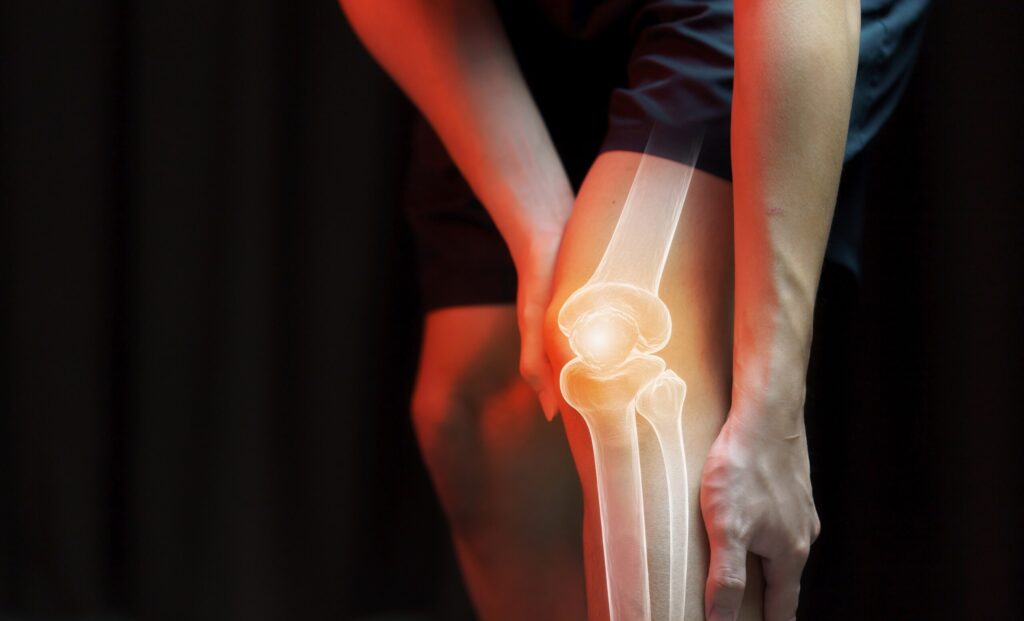
The knee is a complex weight-bearing joint made up of bones, cartilage, menisci, ligaments, tendons, and muscles that work together to provide movement and stability. Pain can develop when one or more of these structures become injured, irritated, or affected by arthritis or other degenerative changes.
Some knee problems develop gradually, while others begin after a specific injury. Symptoms can include pain, stiffness, swelling, reduced range of motion, weakness, catching or locking, or the feeling that the knee may give way.
Understanding what is happening inside and around the knee is an important first step before deciding which treatment approach may be appropriate.
Your Knee Pain Evaluation Helps Guide the Next Step
At Innovative Medical Center, knee pain care begins with understanding when your symptoms started, where the pain occurs, which activities aggravate it, previous injuries or treatment, and how the problem is affecting walking, stairs, exercise, work, and other daily activities.
Your provider may evaluate knee movement, range of motion, strength, stability, tenderness, swelling, and overall leg function. X-rays can provide useful information about arthritis, joint-space narrowing, alignment, and other changes within the knee, while MRI or other testing may sometimes be considered when additional information about soft tissues is needed.
The goal is to understand what may be contributing to your symptoms and determine which conservative options available at IMC may make sense for your particular knee.

Knee Pain & Related Conditions We Evaluate
Knee pain does not always mean the same thing. One patient may have osteoarthritis that has developed gradually over many years, while another may be experiencing symptoms related to an injury, repetitive stress, or a problem involving the supporting tissues around the knee. Osteoarthritis is particularly common in the knee and can cause pain, stiffness, swelling, and loss of motion.
Depending on your symptoms and examination findings, you may also want to learn more about:
- Arthritis – osteoarthritis is a common cause of chronic knee pain, stiffness, and reduced mobility
- Sports Injuries – ligament, meniscus, tendon, and other knee injuries can occur during exercise or athletic activity
- Hip Pain – problems involving the hip and lower extremity can affect walking and overall movement
- Joint Pain & Mobility Problems – persistent stiffness, weakness, or difficulty with everyday movement may require a broader functional evaluation
- Interventional Pain Management – natural, non-pharmaceutical injection options may be considered for certain knee and joint conditions
- Regenerative Medicine – PRP may be evaluated as an option for certain knee and musculoskeletal conditions
- Physiotherapy & Functional Rehabilitation – targeted rehabilitation can help address knee strength, stability, mobility, and functional limitations
Not every patient needs the same combination of services. Recommendations at IMC are based on your examination findings, health history, severity of symptoms, and individual goals.
Frequently Asked Questions About Knee Pain
What causes knee pain?
Knee pain can have many possible causes.
Osteoarthritis is a common cause of chronic knee pain, particularly as people get older. Injuries involving the meniscus, ligaments, tendons, bones, or other structures can also cause symptoms. Repetitive stress, previous injuries, and other joint conditions may contribute as well.
Because different problems can produce similar symptoms, persistent knee pain should be evaluated rather than assuming it is simply arthritis or normal aging.
What are common symptoms of a knee problem?
Symptoms can include:
- Pain or aching
- Swelling
- Stiffness
- Reduced range of motion
- Difficulty walking or climbing stairs
- Pain when standing from a chair
- Catching or locking
- Clicking, popping, or grinding
- Weakness
- A feeling that the knee may buckle or give way
The pattern of symptoms can provide useful information about which structures may be involved.
Can arthritis cause knee pain?
Yes.
The knee is one of the joints most commonly affected by osteoarthritis. As osteoarthritis progresses, tissues within the joint change over time and patients may experience pain, stiffness after inactivity, swelling, reduced range of motion, and difficulty performing everyday activities.
What does “bone-on-bone” knee arthritis mean?
“Bone-on-bone” is a common way of describing advanced loss of joint space associated with severe osteoarthritis.
Healthy cartilage normally helps the surfaces of the knee move smoothly. With advanced osteoarthritis, substantial cartilage loss can result in greatly reduced joint space and increased contact between the bones, which may contribute to pain, stiffness, swelling, and reduced function.
Does bone-on-bone knee arthritis automatically mean I need a knee replacement?
Not automatically.
The decision to consider knee replacement is based on more than an X-ray. The severity of your pain, stiffness, mobility limitations, effect on daily activities, overall health, examination findings, and response to non-surgical treatment all matter. Knee replacement is generally considered when severe arthritis causes substantial pain or disability and other treatment approaches are no longer providing adequate help.
Patients with advanced arthritis should have realistic expectations about what conservative care can and cannot accomplish.
Can knee arthritis be reversed?
Osteoarthritis is a degenerative joint disease, and current treatments do not reverse the underlying disease or reliably restore cartilage that has already been lost.
Treatment instead focuses on areas such as reducing symptoms, maintaining or improving function, strengthening the muscles supporting the joint, and helping patients remain active when possible.
Why does my knee hurt when I walk or climb stairs?
Walking and climbing stairs place load through the knee and require coordinated movement from the joint and surrounding muscles.
Arthritis, injury, weakness, reduced mobility, and other knee problems can make these activities painful. An evaluation can help determine whether the problem is primarily within the joint or whether strength, stability, movement, or surrounding tissues may also be contributing.
Why is my knee stiff after sitting?
Knee stiffness after rest or inactivity is commonly associated with osteoarthritis. People with osteoarthritis often experience stiffness after periods of rest that improves as they begin moving.
Persistent stiffness can also occur with other knee conditions, so the symptom alone does not establish a diagnosis.
What does it mean if my knee clicks, pops or grinds?
Knee noises can occur for many reasons and do not automatically indicate a serious problem.
With osteoarthritis, roughened joint surfaces can sometimes produce grinding, clicking, snapping, or other sounds known as crepitus.
However, clicking accompanied by pain, swelling, catching, locking, or instability may deserve evaluation because injuries such as a meniscus tear can produce those symptoms.
Can knee injections rebuild cartilage?
Patients should be cautious about claims that an injection can simply “regrow” cartilage in an arthritic knee.
Advanced osteoarthritis involves structural changes within the joint, and current evidence does not support promising that an injection will restore cartilage that has already been lost or reverse osteoarthritis.
At IMC, injection recommendations should be based on the individual condition and realistic treatment goals rather than promises of cartilage regrowth.
When should knee replacement be considered?
Knee replacement may be considered when severe arthritis or joint damage causes substantial pain, stiffness, or disability and non-surgical treatments are no longer providing adequate improvement.
Examples can include significant difficulty walking or climbing stairs, pain at rest, persistent inflammation or swelling, deformity, or substantial limitations in daily activities.
If your condition requires orthopedic surgical evaluation, conservative treatment should not be used as a substitute for appropriate specialty care.
Book Your Consultation
Personalized Care Plans
Recommendations based on your condition, goals, and evaluation.
Multiple Services Under One Roof
Integrated medical, chiropractic, rehabilitation, and advanced treatment options.
Clear Answers, No Pressure
Understand your options, recommendations, and costs before beginning care.
Focused on Better Function
Care designed to support mobility, comfort, and quality of life.