
Hip Pain Can Come From the Joint or the Tissues Around It
The hip is a large weight-bearing joint surrounded by muscles, tendons, ligaments, cartilage, bursae, and other structures that help provide movement and stability. Pain can develop when the joint itself or the surrounding tissues become injured, irritated, or affected by degenerative changes.
Osteoarthritis is one common cause of chronic hip pain and may produce pain or stiffness in the hip, groin, inner thigh, or buttock. Other problems, including bursitis, tendon injuries, hip impingement, and certain sports-related injuries, can produce different patterns of pain and movement limitations.
Because several conditions can feel like “hip pain,” understanding where the symptoms originate is an important part of determining what type of care may be appropriate.
Where Your Hip Hurts Can Provide Important Clues
The location of hip pain can help narrow down which structures may be involved. Pain deep in the groin is commonly associated with problems involving the hip joint itself, including osteoarthritis and hip impingement. Pain along the outside of the hip may be associated with bursitis or surrounding soft tissues.
At Innovative Medical Center, evaluation begins with where you feel the pain, when symptoms started, which movements make them better or worse, previous injuries, available imaging, and how the problem is affecting walking and daily activity.
Your provider may evaluate range of motion, strength, stability, tenderness, gait, and overall lower-body function. Imaging may also be reviewed or recommended when clinically appropriate. The goal is to determine what may be contributing to your symptoms and whether the conservative options available at IMC are appropriate for your particular condition.

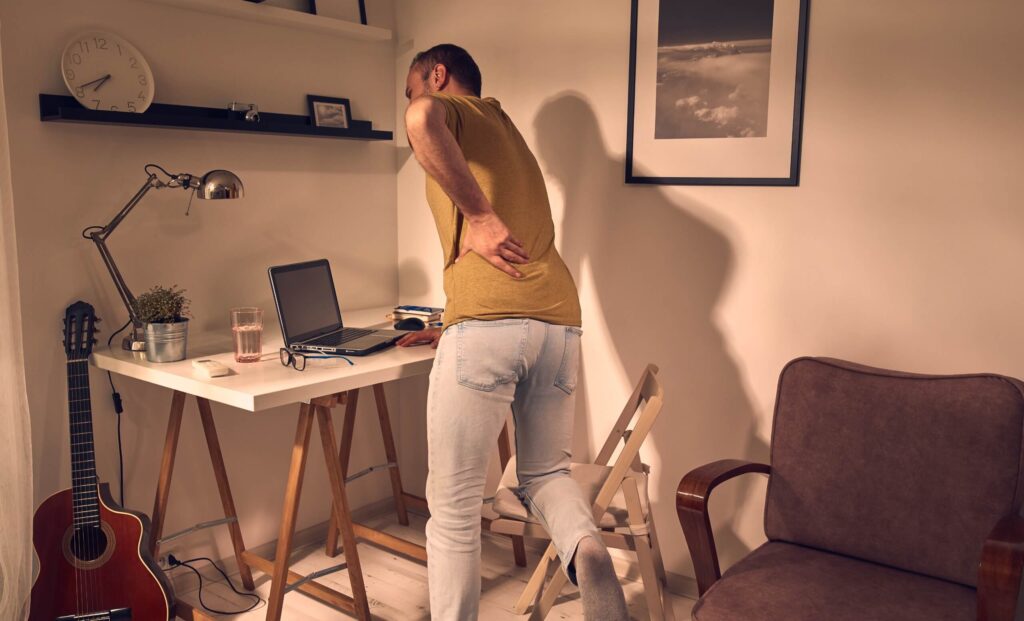
Hip Pain & Related Conditions We Evaluate
Hip pain can develop gradually from arthritis or repetitive stress, or begin following an injury. Symptoms may also overlap with problems originating in the lower back, pelvis, or surrounding muscles and tendons.
Depending on your symptoms and examination findings, you may also want to learn more about:
- Arthritis – osteoarthritis commonly affects the hip and can cause pain, stiffness, and progressive loss of mobility
- Sports Injuries – activity-related injuries can affect the muscles, tendons, cartilage, and other structures around the hip
- Back Pain – lower back conditions can sometimes produce pain that is felt around the buttock or hip
- Sciatica – nerve irritation may produce pain that travels through the buttock and leg and can sometimes be mistaken for a hip problem
- Knee Pain – hip problems can affect walking mechanics, while hip arthritis can sometimes produce pain that is felt as far away as the knee
- Physiotherapy & Functional Rehabilitation – targeted rehabilitation may address hip strength, mobility, balance, stability, and movement limitations
- Interventional Pain Management – natural, non-pharmaceutical injection options may be considered for certain joint and musculoskeletal conditions
- Regenerative Medicine – PRP may be evaluated for certain appropriate hip and musculoskeletal conditions
Not every type or severity of hip condition is appropriate for conservative care. Recommendations are based on your diagnosis, examination findings, available imaging, health history, and functional goals.
Frequently Asked Questions About Hip Pain
What causes hip pain?
Hip pain has many possible causes.
Osteoarthritis is a common cause, particularly as people get older. Bursitis, muscle or tendon problems, hip impingement, injuries, labral or cartilage problems, and other conditions can also produce pain around the hip.
Pain around the hip can also originate somewhere else, including the lower back, so determining where the symptoms are coming from is important.
What are common symptoms of a hip problem?
Depending on the underlying condition, symptoms may include:
- Pain in the groin, outer hip, thigh, or buttock
- Hip stiffness
- Reduced range of motion
- Difficulty walking
- Limping
- Pain when standing from a chair
- Pain with stairs
- Difficulty putting on shoes or socks
- Pain when lying on one side
- Catching, locking, clicking, or snapping
- Pain during exercise or certain movements
The pattern of symptoms can provide useful information during your evaluation. Hip osteoarthritis, for example, commonly causes pain and stiffness and can progressively reduce hip movement.
Can arthritis cause hip pain?
Yes.
The hip is one of the joints commonly affected by osteoarthritis. Hip osteoarthritis can cause pain and stiffness in the hip or groin and may also produce discomfort in the inner thigh, buttock, or knee. Range of motion can become more limited as the condition progresses.
What does “bone-on-bone” hip arthritis mean?
“Bone-on-bone” is commonly used to describe advanced osteoarthritis with substantial cartilage loss and narrowing of the joint space.
It indicates significant structural degeneration, but an X-ray alone does not determine how much pain or disability someone experiences or which treatment is appropriate. Symptoms, mobility, examination findings, health history, and the effect on everyday life also matter.
Does bone-on-bone hip arthritis automatically mean I need a hip replacement?
Not automatically.
Hip replacement is typically considered when hip pain significantly limits everyday activities, pain continues even at rest, stiffness substantially limits movement, and non-surgical treatment is no longer providing adequate relief.
Some patients with advanced arthritis may still use conservative care to address symptoms and function. Others may be better served by an orthopedic evaluation. IMC should not promise that conservative treatment can eliminate the need for hip replacement.
Can hip pain be caused by bursitis?
Yes.
Hip bursitis occurs when one of the fluid-filled bursae around the hip becomes inflamed. Trochanteric bursitis commonly causes pain over the outside of the hip and upper thigh.
Pain may be worse when lying on the affected side, getting up after sitting, walking for extended periods, climbing stairs, or squatting.
Why does the outside of my hip hurt when I lie on it?
Pain on the outer side of the hip, particularly when lying directly on that side, can occur with trochanteric bursitis and other conditions affecting the soft tissues around the hip.
Hip bursitis can also cause pain with prolonged walking, stair climbing, squatting, and standing from a seated position.
An evaluation can help determine whether the bursa, surrounding tendons, joint, or another structure may be contributing.
Is hip pain the same as sciatica?
No.
Sciatica describes nerve-related symptoms that generally begin in the lower back or buttock and may travel down the leg. Hip conditions more commonly produce symptoms centered around the hip, groin, outer thigh, or surrounding tissues.
Because the symptom patterns can overlap, evaluation may be necessary to distinguish between a hip joint problem and nerve-related pain.
How is hip pain evaluated?
Evaluation begins with your symptoms, health history, previous injuries, activity level, and how the problem is affecting daily movement.
Your provider may evaluate hip range of motion, strength, tenderness, gait, stability, and whether particular movements reproduce your symptoms.
Depending on the suspected condition, imaging may also be helpful. X-rays can provide information about arthritis and bone structure, while MRI can provide additional information about soft tissues such as the labrum and cartilage.
Can hip pain be treated without surgery?
Many hip conditions are initially managed without surgery.
Depending on the diagnosis, conservative treatment may involve activity modification, exercise or rehabilitation, assistive devices, medications, injections, or other approaches. Physical therapy and exercise are among the non-surgical options used for hip osteoarthritis and other hip conditions.
Some structural injuries and advanced joint conditions may ultimately require orthopedic or surgical care. The goal at IMC is to determine whether the conservative options available at the practice are appropriate for your particular condition.
When should hip pain be evaluated?
Consider an evaluation when hip pain persists, repeatedly returns, limits walking or other daily activities, causes a limp, reduces your range of motion, interferes with sleep, or is accompanied by recurring weakness, catching, or locking.
Hip pain following a fall, sports injury, or other trauma also deserves evaluation when symptoms are significant or are not improving.
Book Your Consultation
Personalized Care Plans
Recommendations based on your condition, goals, and evaluation.
Multiple Services Under One Roof
Integrated medical, chiropractic, rehabilitation, and advanced treatment options.
Clear Answers, No Pressure
Understand your options, recommendations, and costs before beginning care.
Focused on Better Function
Care designed to support mobility, comfort, and quality of life.