
Back Pain Can Have More Than One Cause
Back pain can begin suddenly after an injury or movement, develop gradually over time, or persist without one obvious event that caused it. Problems involving muscles, joints, spinal discs, ligaments, degenerative changes, or irritated nerves can all contribute to back pain.
The way back pain feels can also vary. Some people experience a dull ache or stiffness, while others have sharp pain, muscle spasms, reduced mobility, or symptoms that travel into the hip or leg. Because different conditions can produce similar symptoms, identifying what may be contributing to the problem is an important part of determining which type of care makes sense.
Evaluation Helps Determine the Right Approach
At Innovative Medical Center, back pain care begins with understanding where your symptoms occur, how long they have been present, what makes them better or worse, previous injuries or treatment, and how the problem is affecting your everyday activities.
Your provider may evaluate movement, range of motion, strength, joint function, neurological findings, and other factors related to your symptoms. Imaging is not automatically necessary for every case of back pain, but it may be considered when your history or examination suggests that additional information is needed. The goal is to determine whether conservative care at IMC is appropriate and which services may be most relevant to your condition.

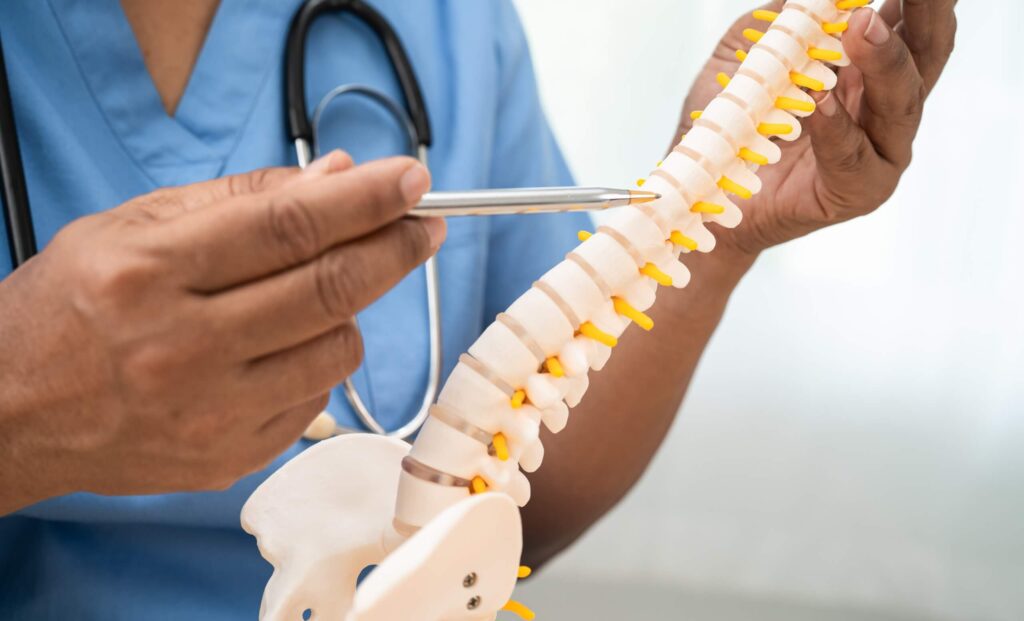
Back Pain & Related Conditions We Evaluate
Back pain is a broad symptom, and the underlying problem can involve very different structures. One patient may be dealing with a muscular or movement-related problem, while another may have a disc condition or nerve compression.
Depending on your symptoms and examination findings, you may also want to learn more about:
- Sciatica – pain, numbness, tingling, or weakness that may travel from the lower back or buttock into the leg
- Pinched Nerves – irritated or compressed spinal nerves can cause pain and neurological symptoms beyond the back
- Bulging or Herniated Discs – changes within a spinal disc may irritate nearby nerves or contribute to back and leg symptoms
- Spinal Stenosis – narrowing within the spine can place pressure on nerves and contribute to back, buttock, or leg symptoms
- Degenerative Disc Disease – changes within the spinal discs may be associated with stiffness, discomfort, or reduced function
- Arthritis – degenerative changes affecting joints within the spine can contribute to pain and limited mobility
Depending on the cause of your back pain, care at IMC may involve Chiropractic Care, Physiotherapy & Functional Rehabilitation, Spinal Decompression, or another conservative approach when appropriate.
Frequently Asked Questions About Back Pain
Is back pain serious?
In most cases, back pain isn’t a sign of a serious condition, but it may lead to other more serious conditions. In fact, low back pain affects millions of people across the United States. However, even when low back pain doesn’t stem from a serious condition, it can still be painful and even disabling. Innovative Medical carefully examines the patient to find the root of the cause and identify factors triggering the back pain. Some patients with low back pain even find themselves unable to work or enjoy life like they once did. Innovative Medical Center is here to provide back pain relief for those looking to avoid surgery or the harmful, dangerous medications usually prescribed.
What causes back pain?
Mechanical or structural problems involving the muscles, ligaments, tendons, spinal joints, discs, or nerves can contribute to symptoms. Back pain may also develop following an injury or repetitive strain, and age-related changes within the spine can become relevant for some patients.
Low back pain can occur for many different reasons. For example, many patients experience back pain because they have injured the muscles in the back. In other cases, back pain may develop because the patient has a structural abnormality, such as bone spurs or scoliosis. Other possible causes of back pain include poor posture, herniated discs, or degenerative disc disease. From many years of expertise with Spinal pain, IMC doctors have found forward head posture to also be a culprit of back pain.
Because several conditions can produce similar symptoms, the cause should not be assumed based on pain alone.
How does Innovative Medical Center approach back pain relief?
From Back Pain Relief to Corrective Care
Your customized treatment plan will involve medical treatment of your injury or condition, including supportive services designed to improve your health and functioning so you can heal, recover, and prevent re-injury.
You’ll Discover Natural Pain Management Methods.
Using manual therapy and injections, we’ll heal your injury without using expensive, invasive surgeries with extensive (and painful) recovery periods.
A Synergy of Services
- Spinal Postural Screening identifies and corrects biomechanical alignment issues.
- Rehabilitative Services improve strength and increase functioning and range of motion.
- NDS (No Disc Surgery) provides healing and relief for spinal disc disease, bulging disc, and herniated disc.
- Trigger Point Injections provide immediate relief and relaxation of trigger points in the muscles of the back, neck, and shoulders.
- Chiropractic Care corrects alignment and mechanical problems.
- Manual Therapy offers hands-on healing for muscles and tissues.
What is the difference between acute and chronic back pain?
Acute back pain begins suddenly and is generally short-term. It may occur after lifting, an awkward movement, prolonged positioning, an injury, or another physical stress.
Chronic back pain persists for a longer period of time or repeatedly returns. The factors contributing to chronic pain may be different from those involved in a recent injury and may require a broader evaluation.
What does lower back pain feel like?
Lower back pain can feel different from one patient to another.
Symptoms may include:
- Aching or soreness
- Sharp or stabbing pain
- Stiffness
- Muscle spasms
- Reduced range of motion
- Pain with sitting, standing, bending, or walking
- Pain that travels into the buttock or leg
- Numbness, tingling, or weakness when a nerve is involved
The type and location of your symptoms can provide useful information during your evaluation.
Is back pain always caused by a disc problem?
No.
Spinal discs are only one possible source of back pain. Muscles, ligaments, joints, tendons, nerves, injuries, arthritis, and other spinal conditions can also contribute to symptoms.
This is one reason treatment should be based on an evaluation rather than assuming that every case of back pain requires the same approach.
Can a bulging or herniated disc cause back pain?
Yes.
A disc problem can contribute to back pain and may also irritate or compress a nearby nerve root. When a nerve is involved, symptoms may include radiating pain, numbness, tingling, or weakness in addition to back discomfort.
What is the difference between back pain and sciatica?
Back pain refers broadly to discomfort involving the back, while sciatica describes a particular pattern of nerve symptoms.
Sciatica can cause pain, numbness, tingling, or weakness that travels from the lower back or buttock into the leg. It occurs when the sciatic nerve or associated nerve roots become irritated or compressed.
Can a pinched nerve cause back and leg pain?
Yes.
When a spinal nerve root is irritated or compressed, symptoms may extend beyond the back itself. Depending on the nerve involved, this may include pain, burning, tingling, numbness, or weakness in the buttock, hip, leg, or foot.
Does back pain always require surgery?
No.
Back pain can be managed in many different ways, including non-surgical approaches, depending on the underlying condition. Surgery may be appropriate for some structural or neurological problems, but it is not necessary for every patient with back pain.
The appropriate approach depends on the diagnosis, severity of symptoms, neurological findings, previous treatment, and individual patient.
When should I have back pain evaluated?
Consider an evaluation when back pain is persistent, worsening, repeatedly returning, or interfering with your ability to sit, stand, walk, sleep, work, exercise, or perform normal activities.
Back pain accompanied by neurological symptoms such as persistent numbness or weakness also deserves medical attention.
Book Your Consultation
Personalized Care Plans
Recommendations based on your condition, goals, and evaluation.
Multiple Services Under One Roof
Integrated medical, chiropractic, rehabilitation, and advanced treatment options.
Clear Answers, No Pressure
Understand your options, recommendations, and costs before beginning care.
Focused on Better Function
Care designed to support mobility, comfort, and quality of life.