
Sports Injuries Can Happen at Any Level
You do not have to be a professional athlete to experience a sports injury. Running, weight training, recreational sports, youth athletics, weekend activities, and repetitive exercise can all place stress on muscles, tendons, ligaments, joints, and other parts of the musculoskeletal system.
Some injuries happen suddenly, such as a sprain, strain, or impact-related injury. Others develop gradually as repetitive stress exceeds the body’s ability to recover. Pain, swelling, stiffness, weakness, reduced range of motion, or difficulty performing a particular movement can all be signs that an injury deserves a closer look.
Treatment Starts With Understanding the Injury
Effective sports injury care begins with determining what was injured and how it is affecting your movement and function. At Innovative Medical Center, we review how the injury occurred, where you are experiencing symptoms, what movements make them better or worse, previous injuries, your activity level, and what you want to return to doing.
Your examination may evaluate areas such as joint mobility, strength, stability, range of motion, balance, and movement. When clinically appropriate, imaging may also be used to better understand the injury. From there, our team can determine whether conservative care at IMC is appropriate or whether another type of medical or orthopedic evaluation is needed.
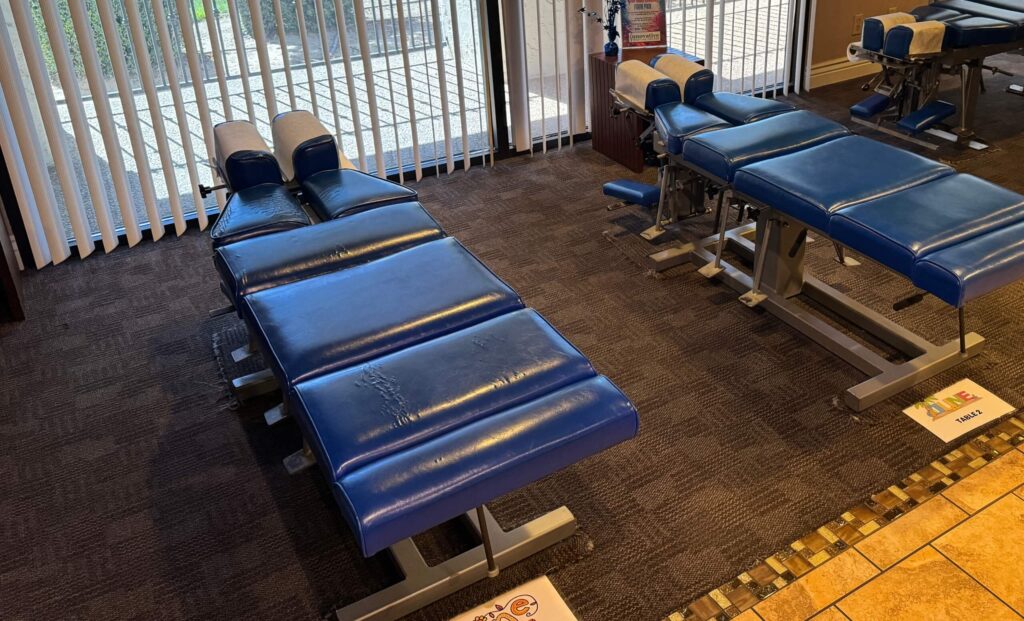

An Integrated Approach to Sports Injury Recovery
Getting back to activity involves more than making pain disappear. An injury can also affect strength, mobility, stability, confidence, and the way your body performs certain movements. That is why sports injury care at IMC may draw from several services depending on your evaluation.
Your care may include:
- Physiotherapy & Functional Rehabilitation – rebuilding strength, mobility, stability, balance, and movement following an injury
- Chiropractic Care – addressing certain joint, spinal, and musculoskeletal movement limitations when appropriate
- Pain Management – natural, non-pharmaceutical injection options may be considered for certain joint and musculoskeletal injuries
- Regenerative Medicine – PRP may be evaluated as an option for certain tendon, joint, or other musculoskeletal conditions
- Spinal Decompression – certain sports-related back, disc, or nerve symptoms may warrant evaluation for non-surgical decompression
- Knee Pain – knee injuries and persistent knee symptoms may require more focused evaluation and treatment
- Hip Pain – hip and surrounding soft-tissue concerns can affect running, lifting, and other athletic movement
- Back Pain – strains, repetitive loading, and other musculoskeletal conditions can interfere with sport and exercise
Not every injury requires every service. Your treatment recommendations are based on the specific injury, your examination findings, and the level of activity you want to safely return to.
Frequently Asked Questions About Sports Injuries
What is considered a sports injury?
A sports injury is an injury that occurs during sports, exercise, training, or other physical activity.
Sports injuries can involve muscles, tendons, ligaments, joints, bones, and other musculoskeletal structures. Common examples include sprains, strains, tendinitis, bursitis, fractures, and dislocations.
What is the difference between an acute injury and an overuse injury?
An acute sports injury occurs suddenly, often because of a fall, collision, awkward movement, or other specific event.
An overuse injury develops more gradually as repeated stress is placed on a part of the body over time. Symptoms may initially appear only during activity and become more persistent if the problem continues.
What are the most common symptoms of a sports injury?
Symptoms vary depending on the injury but may include:
- Pain or tenderness
- Swelling
- Bruising
- Stiffness
- Weakness
- Reduced range of motion
- Difficulty putting weight on an area
- Pain with a particular movement or activity
- Reduced strength or athletic function
Persistent or significant symptoms should be evaluated rather than repeatedly training through pain.
When should I get a sports injury checked?
Consider an evaluation if pain or swelling is persistent, you have difficulty moving or using the injured area, symptoms are getting worse, or the injury is preventing you from participating normally in activities.
Continuing to exercise through an injury can sometimes cause additional harm, so significant symptoms should not simply be ignored.
Can functional rehabilitation help with a sports injury?
Yes, functional rehabilitation may be appropriate for many musculoskeletal sports injuries.
Rehabilitation can focus on rebuilding strength, mobility, stability, balance, coordination, and movement after an injury. The specific exercises and progression depend on the injury, your current abilities, and the activities you are working toward.
Can chiropractic care be used for sports injuries?
Chiropractic care may be appropriate for certain sports-related musculoskeletal and joint concerns.
Treatment recommendations depend on the type of injury and examination findings. At IMC, chiropractic care may be used on its own or alongside rehabilitation when appropriate.
Can natural medical injections be part of sports injury care?
For certain joint or musculoskeletal concerns, IMC’s non-pharmaceutical medical injection options may be considered as part of a treatment plan.
The type of injection and whether it is appropriate depend on the injury, examination findings, health history, and treatment goals.
How long does it take to recover from a sports injury?
Recovery time varies significantly depending on the type and severity of the injury, the tissue involved, your overall health, previous injuries, activity level, and how your body responds to treatment.
There is no single recovery timeline that applies to every sports injury. Your team can help establish appropriate goals and monitor your progress throughout care.
Should I stop exercising if something hurts?
Pain during activity can be a signal that something needs attention.
If an activity causes significant or worsening pain, stop the activity rather than repeatedly pushing through it. Whether you need complete rest or can safely modify your activity depends on the type and severity of the injury.
Do you only treat competitive athletes?
No.
Sports injury care can be appropriate for competitive athletes, recreational athletes, runners, gym-goers, active adults, and others whose injury occurred during exercise or physical activity.
Our focus is the injury and the level of function you want to regain, not whether you compete professionally.
When does a sports injury require urgent or emergency care?
Seek urgent or emergency evaluation for concerns such as an obvious deformity, suspected fracture or dislocation, inability to bear weight after a significant injury, severe swelling or pain, significant head or neck trauma, loss of consciousness, or sudden neurological symptoms.
Innovative Medical Center provides scheduled outpatient care and is not an emergency or trauma facility.
Book Your Consultation
Personalized Care Plans
Recommendations based on your condition, goals, and evaluation.
Multiple Services Under One Roof
Integrated medical, chiropractic, rehabilitation, and advanced treatment options.
Clear Answers, No Pressure
Understand your options, recommendations, and costs before beginning care.
Focused on Better Function
Care designed to support mobility, comfort, and quality of life.